Best 7 Electric Motor Contactor Options for Your Needs?
Electric Motor Contactors play a crucial role in controlling motors efficiently. They act as switches, managing the power flow to various motor types. Selecting the right contactor can make a significant difference in performance and lifespan.
Many options exist on the market, each designed for specific needs. However, not all Electric Motor Contactors are created equal. Some may offer features that don't align with your requirements. It's essential to evaluate your motor specifications and consider the intended application.
Choosing the wrong contactor could lead to failures or inefficiencies. Additionally, understanding the electrical ratings and compatibility is vital. In this exploration, we will uncover the best seven options, highlighting both strengths and weaknesses. This discussion aims to provide clarity in a sometimes confusing landscape. Let's dive into the options and see what fits your needs best.
Understanding Electric Motor Contactors and Their Functions
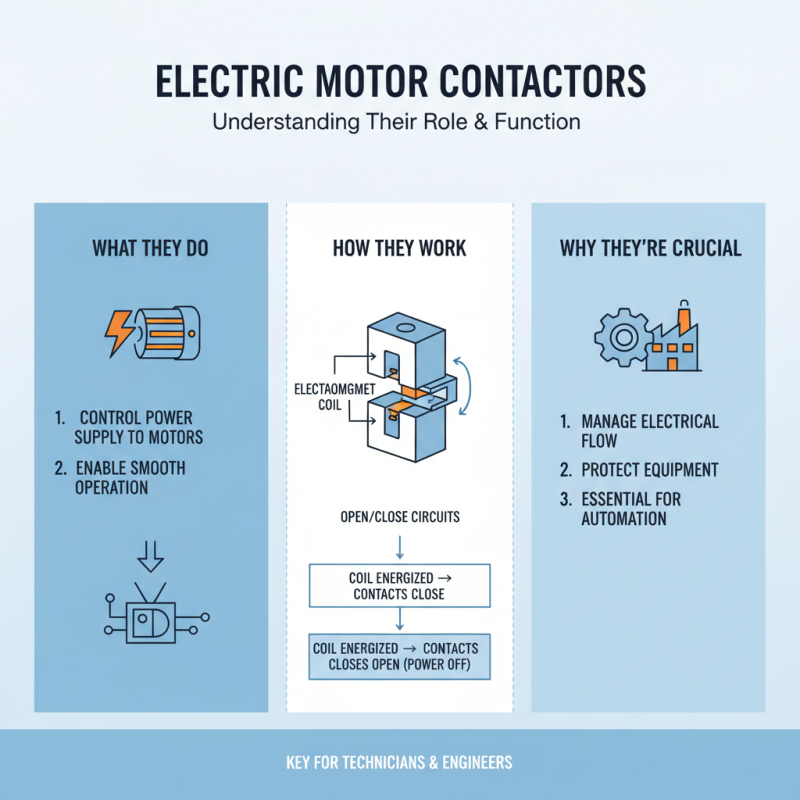
Electric motor contactors are essential components in electrical systems. They control the power supply to electric motors, enabling smooth operation in various applications. By opening or closing circuits, contactors can manage the electrical flow. Understanding how they work is crucial for any technician or engineer.
Contactors come with different specifications. Some are designed for high-voltage applications, while others suit low-voltage tasks. When selecting one, consider the motor's voltage and current ratings. Compatibility matters. A mismatch could lead to overheating or failure.
**Tip:** Always check the contactor's electrical ratings. This ensures it can handle your motor’s needs.
Another important point is the type of load. Inductive loads, like motors, require specific contactors. They need to deal with the surge current during startup. Not all contactors fit all situations. Choosing wisely depends on understanding your system.
**Tip:** Think about the installation environment. Factors like temperature and humidity can affect contactor lifespan.
Feel free to ask technicians for advice. Not all contactors are user-friendly. Some may require complex installation. Keep safety in mind when working with electricity. Your choices impact efficiency and reliability.
Key Factors to Consider When Choosing an Electric Motor Contactor
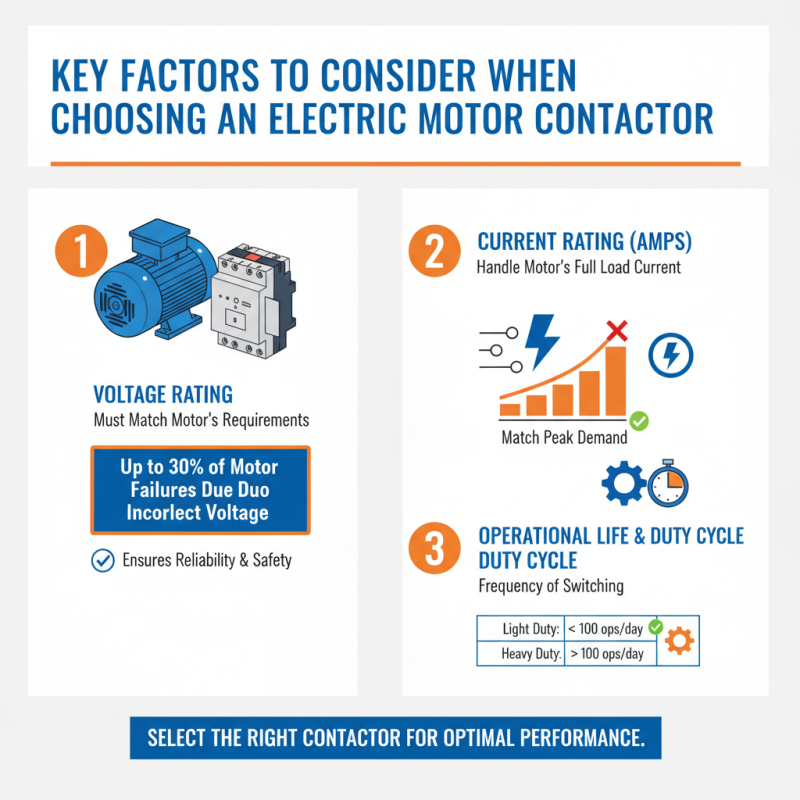
When selecting an electric motor contactor, several key factors emerge. The voltage rating of the contactor should match the motor's requirements. Research indicates that up to 30% of motor failures are due to incorrect voltage settings. Choosing a contactor with a suitable rating ensures operational reliability and safety.
Another critical aspect is the current carrying capacity. An improperly rated contactor can lead to overheating or premature failure. Studies show that 25% of industrial downtime is related to contactor failures. It’s necessary to assess the motor's full-load current and factor in potential surges. Overestimation can be wasteful, while underestimation can be catastrophic.
Additionally, consider the environmental conditions. Factors such as temperature, humidity, and exposure to contaminants can significantly affect contactor performance. A report from industry experts reveals that 20% of contactors fail each year due to adverse conditions. Conduct a thorough analysis of the installation site to ensure the contactor can withstand potential challenges. The balance between performance and durability is crucial in your choice.
Top 7 Electric Motor Contactor Options Reviewed and Compared
When choosing the best electric motor contactors, it's essential to consider specific needs. The right contactor can enhance system performance. Each option has unique features worth reviewing.
One popular choice offers high durability. It's designed for heavy-duty applications. However, some may find its size cumbersome, limiting installation flexibility. Another option focuses on compact design. It saves space and can fit in tighter spots. Yet, its power rating might not meet all demands.
Also noteworthy is the versatility of certain models. They cater to a range of voltages and currents. Despite this, settings can sometimes be complex. Users may face a learning curve. Evaluating the connection options is crucial, too. Some contactors may require additional components for optimal use. These factors highlight the importance of careful selection.
Best 7 Electric Motor Contactor Options
| Model |
Voltage Rating |
Current Rating |
Coil Voltage |
Features |
Price Range |
| Model A |
230V |
20A |
24V |
Manual Reset, Compact Design |
$30 - $50 |
| Model B |
480V |
30A |
120V |
Weather Resistant, High Durability |
$45 - $75 |
| Model C |
600V |
40A |
240V |
Auto-Reset, Overload Protection |
$60 - $90 |
| Model D |
120V |
15A |
12V |
LED Indicator, Quick Release |
$25 - $40 |
| Model E |
240V |
25A |
48V |
Silent Operation, Easy Wiring |
$35 - $55 |
| Model F |
400V |
50A |
220V |
High Efficiency, Compact Size |
$70 - $100 |
| Model G |
230V |
35A |
24V |
Multiple Coil Options, Long Lifespan |
$50 - $80 |
Installation and Maintenance Tips for Electric Motor Contactors
When dealing with electric motor contactors, installation and maintenance play crucial roles. Proper installation ensures optimal performance. Begin by confirming the contactor's voltage ratings match your motor specifications. Mount the contactor securely in a dry location. Keep wiring tidy to avoid electrical hazards. Inadequate connections can lead to overheating. Regularly inspect the wiring for signs of wear. Small frays can escalate into more significant issues if overlooked.
Maintenance is equally vital to extend the lifespan of your contactor. Schedule routine inspections every few months. Track contact wear visually. Signs of pitting or burning on contacts indicate they may need replacing. Additionally, ensure that the contactor’s coil voltage matches the supply voltage. Miscalculations here can result in premature failures. Cleaning the components can also help improve functionality. Use a non-conductive cleaner to avoid damaging sensitive parts. Don't ignore unusual noises or vibrations; they can signal potential problems. Understanding these basic practices can lead to a more efficient operation and help prevent unexpected breakdowns.
Top 7 Electric Motor Contactor Options - Performance Comparison
Common Applications and Uses of Electric Motor Contactors
Electric motor contactors play a vital role in various applications. They are widely used in industrial settings. These devices control the power supply to electric motors, ensuring efficient operation. Additionally, contactors help protect motors from overloads and faults. Common installations include HVAC systems, pumps, and conveyor belts. They can also be found in lighting control systems.
In agriculture, contactors automate irrigation systems. This allows farmers to manage water usage effectively. In manufacturing, they enhance machinery operation. However, not all contactors fit every application. Selecting the right type can be challenging. Users must consider voltage, coil ratings, and environmental conditions. Sometimes, a poorly chosen contactor can lead to inefficiencies and unexpected failures.
Understanding the different types of contactors is essential. Magnetic contactors are popular for their reliable switching ability. Solid-state contactors offer silent operation and faster response times. Yet, they may not suit every situation. It's crucial to match the contactor's specifications with the motor's requirements. Choosing the wrong one can lead to costly downtime. Each application demands careful consideration.

 +86 13868429846
 Contact Phone
 Contact Email