Top 10 Motor Protection Controllers You Should Consider for Your Systems?
In the world of industrial automation, the importance of a reliable Motor Protection Controller cannot be overstated. These devices are critical for safeguarding electric motors from various operational hazards. They help prevent damage caused by overloads, short circuits, and phase failures. Choosing the right controller can significantly enhance system efficiency and longevity.
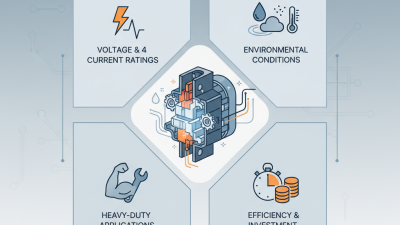
Understanding the features of different Motor Protection Controllers is essential. Some models focus on advanced monitoring capabilities, while others prioritize ease of integration. Awareness of specific motor requirements is also crucial. Factors like voltage rating, current capacity, and environmental conditions play a pivotal role in the selection process.
Despite the variety of options, not every Motor Protection Controller may suit your specific needs. A device that works well in one application might fall short in another. It’s essential to assess your operational environment thoroughly. Continuous reviews and adjustments may be needed to optimize motor protection systems effectively. Balancing cost, functionality, and reliability can be challenging. However, making informed choices will lead to better outcomes for your systems.
Overview of Motor Protection Controllers and Their Importance
Motor protection controllers serve a critical role in industrial applications. They monitor motor performance and protect against faults such as overloads, short circuits, and phase imbalances. According to a report from the International Electrotechnical Commission, nearly 30% of motor failures stem from overheating. Effective motor protection can significantly reduce maintenance costs and downtime.
These controllers also enhance the efficiency of operations. Research indicates that using a motor protection controller can improve energy savings by up to 20%. They provide features like automatic reset and alarms that allow for rapid response to failures. However, many users overlook the importance of regular calibration and settings checks, which can lead to underperformance in protective measures.
Properly implementing these controllers requires expertise and understanding. Without adequate knowledge, settings may not align with specific motor needs, leading to potential failures. Adopting a proactive approach to monitoring and maintenance is essential. Continuous training for staff on emerging technologies is a key factor in maximizing the efficiency and reliability of motor protection systems.
Key Features to Look for in Motor Protection Controllers
When evaluating motor protection controllers, several key features should guide your choice. Start with overload protection. This feature guards against excessive current, which can lead to overheating. Look for controllers that monitor current in real-time. Constant tracking is critical for early detection. If the motor draws too much power, the system can respond quickly to avoid damage.
Another essential feature is phase failure detection. Motors can struggle when one phase fails. Controllers that can identify this issue help prevent operational failures. Additionally, consider the inclusion of ground fault protection. This protects against electrical leaks, ensuring safety in your systems. Don't overlook communication capabilities. Modern controllers should offer integration with automation systems. This enhances monitoring and troubleshooting processes.
It's also important to assess the user interface. A clear display provides easy access to information. Users can quickly adjust settings and understand performance metrics. Some controllers offer data logging, which helps in analyzing trends over time. However, ensure that the complexity does not hinder usability. Simplicity can lead to more effective operation and fewer mistakes. Always prioritize reliability in your choices. A dependable motor protection controller can save time and costs in the long run.
Top 10 Motor Protection Controllers Features Comparison
Top 10 Motor Protection Controllers and Their Unique Benefits
Selecting the right motor protection controller can significantly impact system reliability. These controllers are designed to guard against common issues like overloads, under-voltage, and phase failures. Each controller offers unique benefits that can be tailored to specific operational needs. For instance, some models excel in real-time diagnostics, ensuring immediate detection of faults. Others provide customizable settings to accommodate various motor types, enhancing flexibility.
Durability is also a critical factor in motor protection. Certain controllers are built to withstand harsh environmental conditions, such as extreme temperatures or dust. This resilience can minimize downtime and maintenance costs. However, not all controllers are created equal. Some may lack advanced features or protective measures, which could lead to costly failures. Investment in a quality controller should reflect a thorough analysis of the application requirements.
Consider the user interface of these controllers. An intuitive design allows for easier adjustments and monitoring. This can be essential in dynamic production settings where time is crucial. Ultimately, understanding the unique benefits of each motor protection controller will empower users to make informed decisions. The objective is to protect valuable equipment while ensuring operational efficiency.
Top 10 Motor Protection Controllers and Their Unique Benefits
| Controller Model |
Protection Type |
Key Features |
Unique Benefits |
| Model A |
Overload, Short Circuit |
Digital display, Adjustable settings |
Quick response time |
| Model B |
Phase Failure |
LED indicators, Fault diagnosis |
Enhanced safety features |
| Model C |
Thermal Overload |
Variable settings, Alarm functions |
Cost-effective solution |
| Model D |
Ground Fault |
Real-time monitoring, User-friendly interface |
Improved reliability |
| Model E |
Under Voltage |
Integrated timer, Compact design |
Space-saving design |
| Model F |
Over Voltage |
Adjustable thresholds, Digital readout |
Enhanced efficiency |
| Model G |
Phase Imbalance |
Remote monitoring, Performance tracking |
User customizable settings |
| Model H |
Surge Protection |
Surge indicators, Robust casing |
Durable in harsh environments |
| Model I |
Noise Filters |
Dual filters, Enhanced noise reduction |
Better signal quality |
| Model J |
Current Monitoring |
High accuracy, Logging capabilities |
Improves operational insights |
Comparison of Leading Motor Protection Controllers on the Market
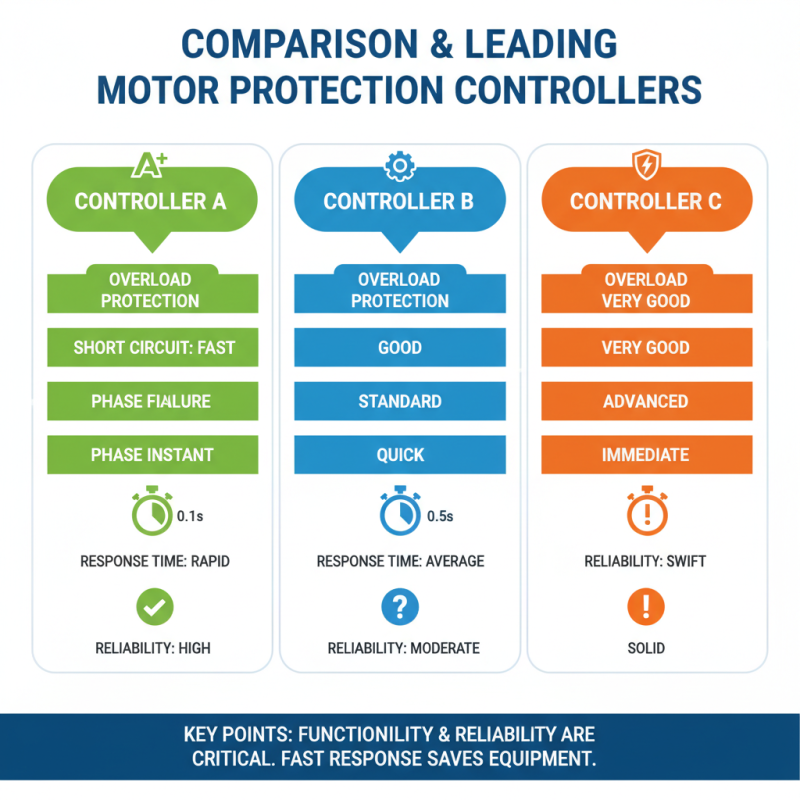
In today’s industrial landscape, motor protection controllers are essential for safeguarding equipment. They prevent damage from overloads, short circuits, and phase failures. When comparing protection controllers, focus on their functionality and reliability. It’s critical to assess how each unit responds to faults. Fast response time helps save equipment from irreparable damage.
Key features to examine include overload protection, under-voltage protection, and programmable settings. These functionalities empower users to tailor the controller to their specific needs. Simplicity in the user interface also contributes to ease of use. Complicated settings can lead to errors, which are undesirable in critical systems. Ensure that any selected controller comes with clear user manuals.
Numerous options exist, but not all may meet rigorous industrial standards. Some controllers may lack flexibility or advanced features. Before making a decision, consider the support and resources available from the manufacturer. Feedback from other users can offer valuable insights into long-term performance. Proper research reduces the risk of operational failures and enhances system efficiency.
Best Practices for Integrating Motor Protection Controllers into Systems
Integrating motor protection controllers into systems requires careful planning and implementation. Motor protection controllers are essential for preventing damage due to overloads, short circuits, and phase failures. Reports indicate that improper integration can lead to system failures, costing companies thousands in repairs.
One critical aspect is ensuring compatibility with existing systems. Data from industry reports show that about 30% of motor failures result from mismatched components. This highlights the importance of selecting controllers that align with motor specifications. Furthermore, proper installation techniques must be followed. Incorrect wiring can lead to malfunction, emphasizing the need for skilled technicians during setup.
Training personnel on the use of these controllers is paramount. Regular training programs can enhance the understanding of control features and troubleshooting methods. A statistics report found that companies with ongoing training see a 25% reduction in operational errors. Additionally, documentation should be available for reference to address common issues. This approach ensures that teams can quickly react to faults, reducing downtime and improving system reliability.

 +86 13868429846
 Contact Phone
 Contact Email