7 Best Appliance Voltage Protectors for Global Buyers
Choosing the right Appliance Voltage Protector can feel confusing, especially for global buyers facing different voltage systems, plug designs, and household conditions. A protector that performs well in London may not suit a kitchen in Lagos, Manila, or São Paulo. Input voltage, frequency, surge capacity, response time, grounding, and socket compatibility all deserve attention. Small details matter. A loose plug can create heat.
Electrical safety educator Mike Holt is often quoted as saying, “Electricity does not forgive mistakes.” That warning fits appliance protection perfectly. A voltage protector can reduce damage from unstable voltage, sudden surges, and brief brownouts. It cannot repair faulty wiring or replace a proper circuit breaker. It also cannot guarantee safety when used with an unsuitable adapter or overloaded extension cord.
This guide reviews seven Appliance Voltage Protector options for international users. The comparison considers practical features, not just attractive specifications. We look at refrigerators, televisions, washing machines, computers, and other sensitive equipment. Some models provide adjustable delay timers. Others show live voltage readings or offer overload protection. A few may appear impressive but lack clear certification details. That should raise questions.
Real homes are rarely perfect. Power may flicker during storms. A refrigerator may restart repeatedly at night. A home office may depend on one small outlet. These situations expose weaknesses that product pages often ignore. Our selections aim to balance protection, usability, build quality, and value. Still, no ranking is universal. Local electrical standards and professional installation remain important. Check both before buying.
What an Appliance Voltage Protector Does and Why It Matters
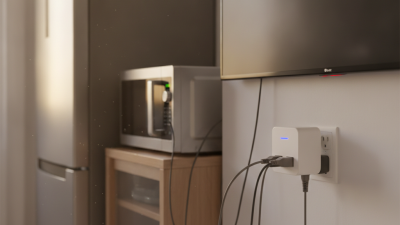
A voltage protector monitors the electricity entering an appliance. It disconnects power during dangerous overvoltage or undervoltage conditions. Some models also delay restart after power returns. That pause protects compressors in refrigerators and air conditioners from rapid cycling. IEEE Standard 1159 identifies sags, swells, interruptions, and transients as common power-quality disturbances. These events may last milliseconds, yet sensitive control boards can still suffer damage. The U.S. Department of Energy has cited annual power-quality losses of $119–188 billion for American businesses. The figure is dated, but the risk remains real.
Choose protection based on your local grid, not only the appliance wattage. Check the operating voltage range, maximum current, response time, thermal protection, and certification marks. A surge-only device will not correct sustained low voltage. An automatic voltage regulator may help, but it cannot repair faulty building wiring. During field inspections, technicians often find loose sockets or overloaded extension cords behind “protected” appliances. That detail is easy to miss. It matters.
Tips: Match the protector’s voltage to the appliance’s rating plate. Select a compressor delay of about three minutes when recommended. Keep ventilation openings clear. Test the cutoff function according to the manual. Replace the unit after a severe surge, visible heating, or repeated nuisance trips. No protector is magic. Professional electrical inspection remains necessary when voltage changes continue.
Key Features to Compare in Voltage Protectors for Global Use
For global buyers, voltage protection starts with the local grid, not the socket shape. Compare input range, rated load, frequency, and response time. A 230-volt appliance needs different protection from a 120-volt device. A protector is not a voltage converter. Check this carefully. The International Energy Agency’s Electricity 2024 report projects global electricity demand will grow by about 4% in 2024 and 2025. Rising demand does not prove unstable voltage, but it supports careful site-level testing.
Look for surge protection tested to IEC 61643-11 or an equivalent national standard. Thermal cutoff, circuit-breaker protection, and a visible fault indicator add practical safety. Compare clamping voltage and energy rating, but do not judge joules alone. Cable quality and grounding matter. Uptime Institute’s 2023 Global Data Center Survey reported that 60% of respondents experienced an outage within three years. Home and office loads differ, yet the warning is useful: resilience needs more than one number.
Tips: Confirm the appliance’s watts, startup current, and plug standard before buying. Verify whether the protector supports 50 Hz, 60 Hz, or both. Choose replaceable modules when local service is limited. Test the indicator after installation. I would also record the measured voltage for one week. That step feels excessive, perhaps, but assumptions fail across borders. Leave ventilation around the unit, and avoid extension chains. An undersized protector can become the weak link.
7 Best Appliance Voltage Protectors for Global Buyers
Key Features to Compare in Voltage Protectors for Global Use
This chart compares common nominal household supply voltages across seven major markets. Brazil uses both 127 V and 220 V systems, while actual voltage can vary by location. Global buyers should verify input-voltage compatibility, acceptable voltage range, surge response, overload protection, grounding requirements, and 50/60 Hz frequency support before selecting a protector.
Seven Top Appliance Voltage Protectors for Different Needs
7 Best Appliance Voltage Protectors for Global Buyers
Seven Top Appliance Voltage Protectors for Different Needs
Global buyers face different voltage standards, grid conditions, and appliance loads. IEC 60038 lists common nominal systems, including 120V and 230V supplies. The International Energy Agency forecasts global electricity demand will grow by about 4% annually through 2026. More demand can increase stress on already uneven networks.
A compact travel voltage protector suits chargers and small appliances. A surge-only protector works for computers against brief spikes. A relay-based over-and-under-voltage protector fits refrigerators and televisions. An automatic voltage regulator helps homes with repeated brownouts. A high-capacity protector serves washing machines and air conditioners. A panel-mounted surge protective device supports whole-home coverage. A monitoring protector adds voltage display, delay timing, and fault alerts.
Different needs require different protection. Motors often need a restart delay after power returns. Sensitive electronics need stable output, not merely a higher joule rating. IEC 61643-11 provides testing principles for surge protective devices, but buyers should still check local certification. World Bank electricity data reported access for about 91% of the global population in 2022, leaving many users exposed to inconsistent service. My practical caution is simple: product labels can oversimplify real loads. A protector rated for 2,000 watts may struggle with a motor’s startup surge. Check voltage, frequency, plug type, grounding, and continuous current before purchase. Some assumptions fail.
Safe Installation, Testing, and Maintenance Guidelines
For global buyers, the best appliance voltage protectors combine seven practical safeguards: overvoltage cutoff, undervoltage cutoff, surge absorption, thermal protection, time delay, grounding support, and clear status indicators. Match the protector’s voltage, frequency, plug type, and current rating to the appliance. A 2,000-watt heater can draw about 8.3 amps at 240 volts, but over 16 amps at 120 volts. That difference matters.
Installation should begin with a dry, powered-off outlet. Check polarity and grounding with a certified socket tester, then confirm voltage using a calibrated multimeter. Never trust a glowing indicator alone. It may show power, not protection. The National Fire Protection Association reported about 32,000 U.S. home fires annually from electrical distribution and lighting equipment during 2016–2020. Those fires caused roughly 470 deaths and 1,100 injuries each year. Proper protection cannot correct damaged wiring.
Test the protector under its stated load, not with a dangerous improvised setup. Confirm that the delay function restores power after a short interruption. Inspect plugs for warmth, discoloration, cracking, or loose contact every month. Keep vents uncovered. Replace the unit after a severe surge, repeated nuisance trips, or failed indicator testing. One limitation deserves attention: a protector can reduce electrical risk, but it cannot guarantee safety during lightning, flooding, or a missing protective earth. A qualified electrician should investigate abnormal readings.

 +86 13868429846
 Contact Phone
 Contact Email