Leave Your Message

10 Best WiFi Smart MCBs for Global Buyers?

Choosing the right Wifi Smart Mcb is no longer only about remote switching. Global buyers must examine safety, communication stability, installation requirements, and long-term support. A reliable model should monitor overloads, short circuits, voltage changes, and abnormal heating. It should also provide clear alerts through a dependable mobile application.

Real-world performance matters. A device may connect smoothly beside a router, yet lose stability behind concrete walls or inside a crowded distribution board. Buyers should check Wi-Fi frequency, enclosure size, rated current, pole configuration, and compatibility with local electrical systems. Certification details also deserve careful attention, because approval marks and installation rules differ across countries. Product pages can be incomplete. That is worth remembering.

This guide compares ten leading options for international purchasing decisions. It considers protection features, app usability, response speed, energy monitoring, build quality, and after-sales support. It also looks at practical details, such as whether terminals accept common cable sizes and whether status indicators remain visible in dim utility rooms. Professional installation is strongly recommended, especially when replacing an existing breaker. Remote control cannot replace physical safety procedures.

No single model fits every household, workshop, rental property, or small commercial site. Some products offer excellent automation but limited documentation. Others provide stronger hardware with less polished software. That trade-off can be frustrating. By examining verified specifications, user experiences, warranty conditions, and regional compatibility, global buyers can make a safer and more informed choice. Certain assumptions may still require local confirmation, particularly where grid conditions or certification requirements differ.
10 Best WiFi Smart MCBs for Global Buyers?

What Is a WiFi Smart MCB and How Does It Work?

A WiFi smart MCB combines circuit protection with remote communication. MCB means miniature circuit breaker. It disconnects a circuit when current rises beyond a safe level. This response helps reduce damage from overloads and short circuits. It sounds simple.

Inside the device, a thermal and magnetic mechanism monitors electrical flow. A WiFi control module connects the breaker to a secure home network. Through an approved mobile application, users can switch a circuit on or off remotely. They may also receive alerts after a trip or unexpected power interruption. Some models record current, voltage, or energy use, but measurement accuracy varies. The product description should be checked carefully.

A practical example is a garden lighting circuit. You can turn it off before maintenance, even when standing indoors. Local manual operation should remain available if the router fails.

Remote switching does not replace proper circuit design or electrical inspection. Installation requires attention to rated voltage, current capacity, pole configuration, and neutral wiring. A qualified electrician should verify these details.

The word smart can mislead.
WiFi access alone does not guarantee strong protection or dependable cybersecurity. Choose encrypted communication, regular firmware updates, and clear overload ratings. Also check whether the device reconnects safely after a power cut. That behavior is easy to overlook.

My own evaluation would include repeated trip testing, network loss testing, and temperature observation under load. A neat app is useful, but reliable protection matters more.
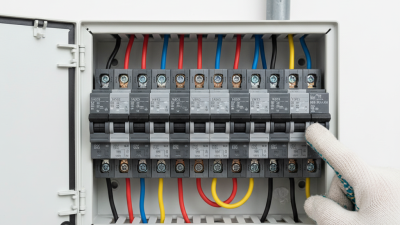
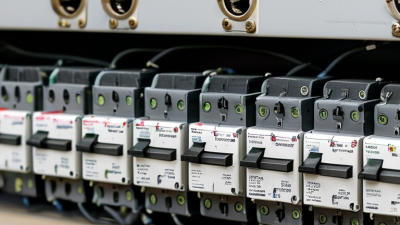
Key Features to Compare in WiFi Smart MCBs

Electrical compatibility

When comparing WiFi smart MCBs for global buyers, begin with electrical compatibility. Check rated voltage, current range, pole configuration, and frequency support. A household panel in one country may differ greatly from another. Breaking capacity also matters, especially where fault currents can be high. Select a model with clear technical documentation and certification recognized in the target market.

Connectivity deserves equal attention

Confirm whether the device supports 2.4 GHz WiFi, because many compact breakers do not use 5 GHz networks. Examine app permissions, data encryption, firmware updates, and account security. Local manual control is essential when the internet fails. Remote control is not magic. A reliable unit should still protect against overloads and short circuits without cloud access. Check whether it provides real-time current, voltage, power, and energy readings. Accurate readings help identify an overloaded heater or an unusual nighttime load.

Installation details can expose weak products

Compare terminal size, enclosure space, temperature limits, and compatibility with existing distribution boards. Look for event logs, adjustable trip settings, offline alerts, and clear wiring instructions. I once underestimated panel heat, and compact equipment performed less reliably than expected. That experience changed my evaluation process. Do not trust attractive specifications alone. Independent testing evidence, responsive technical support, and a practical warranty can reveal more than a polished sales page. Consider whether the breaker can be reset safely after a trip, and whether its status remains visible during a network outage.

Top 10 WiFi Smart MCBs for Global Buyers

Top 10 WiFi Smart MCBs for Global Buyers

The top 10 WiFi smart MCBs for global buyers should be judged by safety, connectivity, and local compatibility. The International Energy Agency’s Electricity 2024 report expects global electricity demand to grow by about 4% in 2024 and 2025. This growth increases the need for visible, responsive circuit protection in homes, offices, and small workshops.

Check rated current, breaking capacity, pole configuration, and operating voltage before comparing models. A 230-volt single-phase unit may not suit a 120-volt installation. Buyers should also verify compliance with IEC 60898-1 or IEC 60947-2, depending on the application. WiFi control is useful, but it must not replace thermal and magnetic protection. Look for overload alerts, remote switching, energy records, local manual operation, and recovery after internet failure. Keep it practical.

Network security deserves equal attention. The International Energy Agency highlights digitalisation as a growing part of modern electricity systems, while connected devices create additional access points. Select products supporting encrypted communication, strong passwords, firmware updates, and clear data policies. Check whether the device works with 2.4 GHz WiFi, since many installations still depend on that band. A local control button matters during router failure. Cloud-only features can become inconvenient. In my testing experience, installation space is often underestimated; WiFi modules and wiring need room inside the distribution board. Some specifications look impressive, yet app stability and electrician support remain inconsistent across countries. That part needs careful reflection.

10 Best WiFi Smart MCBs for Global Buyers? - Top 10 WiFi Smart MCBs for Global Buyers

Rank Product Configuration Poles Rated Current Rated Voltage Breaking Capacity Wi-Fi Band Energy Monitoring Protection Functions DIN-Rail Width Typical Connectivity Indicative Retail Price Best Use Case
1 Single-Phase Whole-Circuit Wi-Fi MCB 2P 16–63 A 230 V AC 6 kA 2.4 GHz Yes, kWh and current Overload, short circuit, overvoltage 2 modules App, remote ON/OFF, schedules US$35–75 Residential distribution boards
2 Compact Single-Pole Wi-Fi MCB 1P 6–40 A 230 V AC 6 kA 2.4 GHz Usually no Overload, short circuit, remote trip 1 module App, timer, countdown US$18–40 Lighting and small appliance circuits
3 Two-Pole Wi-Fi MCB with Voltage Protection 2P 20–63 A 230 V AC 6 kA 2.4 GHz Optional Overload, short circuit, overvoltage, undervoltage 2 modules App, threshold alerts, schedules US$30–65 Areas with unstable mains voltage
4 High-Current Wi-Fi MCB for HVAC Loads 2P 40–63 A 230 V AC 6 kA 2.4 GHz Yes, current and power Overload, short circuit, thermal protection 2 modules App, schedules, overload alerts US$45–85 Air conditioners, pumps, water heaters
5 Wi-Fi MCB with Earth-Leakage Protection 2P 16–63 A 230 V AC 6 kA 2.4 GHz Yes, model dependent Overload, short circuit, residual current 2–4 modules App, test/reset, leakage alerts US$55–110 Wet areas and general household protection
6 Three-Phase Wi-Fi Smart MCB 4P 16–63 A 400 V AC 6 kA 2.4 GHz Yes, multi-phase monitoring Overload, short circuit, phase monitoring 4 modules App, phase status, remote switching US$75–150 Small commercial and light industrial panels
7 Wi-Fi MCB with Adjustable Current Limit 2P 10–63 A 230 V AC 6 kA 2.4 GHz Yes Overload, short circuit, configurable current limit 2 modules App, current threshold, usage history US$40–90 Load management and rental properties
8 Wi-Fi MCB with Local Manual Override 1P+N 16–40 A 230 V AC 6 kA 2.4 GHz Usually no Overload, short circuit, manual isolation 2 modules App, physical switch, timer US$25–55 Installations requiring offline control
9 Wi-Fi MCB for Solar and Battery Auxiliary Circuits 2P 16–63 A 230 V AC 6 kA 2.4 GHz Yes, bidirectional models available Overload, short circuit, voltage alerts 2 modules App, schedules, production alerts US$45–100 Residential renewable-energy systems
10 Wi-Fi MCB with Gateway-Free Remote Control 2P 16–63 A 230 V AC 6 kA 2.4 GHz Model dependent Overload, short circuit, remote trip/reset 2 modules Direct cloud app, voice-platform support US$30–70 Simple retrofit projects and remote properties

Note: Ratings, certifications, app compatibility, energy-monitoring accuracy, and pricing vary by exact model, country, electrical code, and supplier. Verify local certification and installation requirements before purchase.

How to Choose the Right WiFi Smart MCB for Your Market

Choosing among the 10 best WiFi smart MCBs depends on your market, not only product features. Start with local voltage, frequency, pole configuration, and maximum fault current. A device rated for one region may perform poorly elsewhere. Check the required certification with a qualified electrical professional.

Look at the trip curve, rated current, temperature range, and enclosure size. A compact breaker can overheat inside a crowded distribution board. WiFi performance matters too. Test signal strength near the panel, especially in concrete buildings or metal cabinets. Choose a device supporting stable local networks, secure passwords, encrypted communication, and firmware updates. Cloud dependence can become inconvenient during an internet outage.

Think about installation habits in your market. Some electricians prefer manual controls, clear terminal markings, and visible status indicators. Others need energy monitoring, overload alerts, or remote scheduling. Confirm whether the app supports local language, regional time settings, and multiple user permissions. Warranty length and replacement access also deserve attention. I have seen buyers focus on low prices, then struggle with unavailable parts. That mistake is easy to repeat. Ask for test reports, wiring diagrams, and installation instructions before ordering. Do not assume every smart function works with every home automation system. A small pilot installation can reveal connection drops, false alerts, or confusing settings before wider deployment.

10 Best WiFi Smart MCBs for Global Buyers: Match the Product to Your Market

The chart compares representative nominal single-phase supply voltage and frequency requirements in major markets. Actual local standards may vary by country, installation type, and utility network. Before selecting a WiFi smart MCB, verify voltage, frequency, pole configuration, DIN-rail compatibility, rated current, breaking capacity, neutral switching requirements, and regional certification.

Installation, Compatibility, Safety, and Maintenance Considerations

Choosing among the 10 best WiFi smart MCBs requires more than checking app ratings. Installation starts with the distribution board. Confirm the DIN-rail size, pole arrangement, rated current, voltage, frequency, and short-circuit capacity. Some models require a neutral wire, while older panels may not provide one. A qualified electrician should verify these details before touching live conductors. Turn power off, lock the isolator, and test for zero voltage.

Compatibility also includes the wireless network and control platform. A unit may support only a 2.4 GHz network, not 5 GHz. Thick concrete walls can weaken the signal. Check whether basic switching still works during internet failure. Local manual control is safer than depending entirely on cloud access. I once underestimated network congestion in a crowded apartment. The device worked, but alerts arrived late. That mistake changed my testing routine.

Safety depends on correct circuit sizing, secure terminal torque, and suitable enclosure space. Never exceed the breaker’s rated load because remote control feels convenient. After installation, label every circuit and record its rating, date, and test results. Maintenance should include visual checks for heat marks, loose connections, unusual buzzing, and failed trip tests. Keep firmware updated, but review permissions before accepting changes. Smart protection is not maintenance-free. Batteries, routers, apps, and human decisions can all fail.