Leave Your Message

China Best SPD Lightning Arrester Manufacturers?

Choosing among China’s Best SPD Lightning Arrester Manufacturers requires more than comparing prices or catalog photographs. A dependable manufacturer should demonstrate tested products, stable production controls, and clear technical documentation. Look for compliance with IEC 61643-11, appropriate Type 1, Type 2, or Type 3 protection, and verified ratings for Uc, In, Imax, and Up. These figures matter when a device faces a crowded distribution board, a rooftop photovoltaic system, or a long cable run exposed to induced surges.

Richard Kithil, a longtime lightning-safety specialist, states, “There is no such thing as a lightning-proof structure.” That warning should guide every purchasing decision. An SPD Lightning Arrester does not eliminate lightning risk. It limits transient overvoltage and redirects surge energy toward the grounding system. Grounding quality remains essential. So does correct coordination between upstream and downstream protection.

This guide examines Chinese manufacturers through practical indicators. We consider factory experience, test facilities, certification quality, response time, customization ability, and after-sales support. Some suppliers present impressive certificates but provide weak application guidance. Others offer competitive products with limited international documentation. That difference can become expensive during installation.

A serious evaluation should include sample testing, production inspection, impulse-current capability, enclosure quality, and replacement procedures. Ask how the manufacturer handles failed modules. Request traceable test reports, not only marketing claims. The best supplier may not be the cheapest one. Sometimes, the strongest choice is the company that explains its limitations clearly. That honesty deserves attention.
China Best SPD Lightning Arrester Manufacturers?

What Is an SPD Lightning Arrester and How Does It Work?

An SPD lightning arrester protects electrical equipment from sudden voltage surges. These surges may come from nearby lightning, utility switching, or damaged power systems.

Unlike a fuse, an SPD does not normally interrupt current. It redirects excessive energy toward the grounding system.

Inside the device, surge-limiting components react within microseconds. Under normal voltage, they remain mostly inactive. During a surge, their resistance drops sharply.

This creates a safer path and reduces voltage across sensitive equipment. After the event, the device returns to standby operation.

In practical inspections, correct wiring matters as much as the arrester itself. Short, straight conductors usually improve performance.

Poor grounding can leave expensive equipment exposed, even when the SPD looks correctly installed. No device is magic.

Selection must match the system voltage, earthing arrangement, discharge capacity, and expected exposure. Technical standards and manufacturer test data should guide the decision.

Tips:

Check the indicator regularly, especially after severe storms. Keep connection leads short and avoid sharp bends. Install coordinated protection at the service entrance and near sensitive loads. Replace an SPD when its status indicator shows failure. A common mistake is choosing only by price. That approach may save money initially, but it can weaken protection when a real surge arrives.
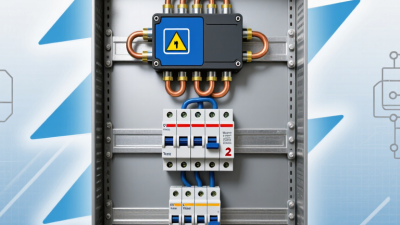
Key Standards for Evaluating Chinese SPD Manufacturers

China Best SPD Lightning Arrester Manufacturers?

Key Standards for Evaluating Chinese SPD Manufacturers

Choosing a Chinese SPD manufacturer requires more than comparing prices. In field inspections, I check certification, test evidence, and production consistency. The manufacturer should identify compliance with IEC 61643-11 for low-voltage AC surge protective devices. For photovoltaic applications, IEC 61643-31 may also apply. Chinese GB/T requirements should match the product’s intended market.

Look closely at electrical ratings. Uc, In, Imax, Iimp, and Up must suit the installation, not merely appear on a label. Ask for test reports from laboratories accredited to ISO/IEC 17025. Verify the exact model, test voltage, date, and laboratory scope. A thermal disconnect, status indicator, and suitable enclosure rating are practical safety details. They matter during real surges.

Production controls reveal more than brochures. Check incoming varistor inspection, assembly records, batch traceability, and routine testing. ISO 9001 supports reliability, but it does not prove surge performance alone. Request samples from different batches and compare their dimensions, markings, and test results. I have seen impressive documents fail to answer simple questions about warranty handling. A checklist can still mislead. Factory audits and technical interviews expose gaps. The evaluation may remain imperfect, especially when test conditions differ from the installation. That uncertainty should be recorded, not hidden.

Leading Types of SPD Lightning Arrester Manufacturers in China

China’s SPD lightning arrester manufacturers usually develop products around protection levels and application settings. Type 1 SPDs handle high-energy partial lightning currents at service entrances. Type 2 models protect distribution boards from residual surges. Type 3 units serve sensitive equipment near the load. Combined Type 1+2 devices suit compact commercial panels. For photovoltaic systems, specialized DC SPDs address higher voltage and direct-current fault conditions. Telecom manufacturers offer protectors for signal lines, Ethernet, and control circuits.

The strongest suppliers support more than a catalog. They provide impulse-current data, thermal-disconnector details, wiring diagrams, and test reports. Factory experience shows that clamping voltage alone cannot prove dependable protection. Check short-circuit ratings, leakage current, response time, enclosure ratings, and replaceable modules. Ask whether tests follow relevant IEC 61643 requirements and whether production samples match certified designs. Good manufacturers also explain earthing length, backup protection, and coordination between Type 1, Type 2, and Type 3 devices. Installation details matter.

Some Chinese factories specialize in high-volume OEM production, while others focus on customized industrial, rail, energy, or communication solutions. Both can be capable. Neither is automatically better. A practical evaluation includes factory records, incoming-material controls, aging tests, and traceable quality documents. Be cautious with unusually low prices and vague surge ratings. I have seen specifications look impressive until cable length and grounding conditions were reviewed. That review is easy to skip, but it often exposes the real weakness.

China Best SPD Lightning Arrester Manufacturers: Leading SPD Types

This chart compares representative discharge-current test values commonly associated with the three protection categories defined in IEC 61643-11. Type 1 SPDs are used at service entrances for high-energy lightning currents, Type 2 SPDs are installed in distribution panels for induced and switching surges, and Type 3 SPDs provide fine protection close to sensitive equipment. Values are technical reference examples, not company or brand performance data.

How to Compare Product Quality, Testing, and Certification

When comparing China’s best SPD lightning arrester manufacturers, start with evidence, not catalog language. In field inspections, I check nameplate ratings, enclosure quality, wiring torque, and replacement indicators. A neat housing means little if the arrester fails repeated surge testing. NOAA educational data estimates about 44 lightning flashes occur worldwide each second. That exposure makes impulse-current performance more important than low purchase price.

Ask for test reports tied to IEC 61643-11, including Class I, Class II, or combined tests. The report should identify Uc, Up, In, Imax, and the declared impulse waveform. Check whether samples came from regular production, not laboratory prototypes. Certification also needs careful reading. UL 1449 covers surge protective devices, but certification does not prove suitability for every distribution system. Verify voltage, earthing arrangement, short-circuit rating, thermal disconnector behavior, and enclosure application. Numbers can mislead.

Independent laboratories and traceable calibration records strengthen reliability. Request test dates, sample serial numbers, failure photographs, and corrective-action records. IEC 61643-11 testing can reveal leakage current, temporary overvoltage response, and endurance after multiple impulses. Ask how many samples were tested; one sample is weak evidence. A professional supplier should explain tolerances without hiding behind certificates. I would also compare aging data at elevated temperature and humidity. This is where many evaluations remain incomplete. Price matters, but lifecycle cost includes downtime, replacement cartridges, inspection labor, and fire-risk controls.

How to Select the Best Chinese SPD Manufacturer for Your Needs

Selecting the best Chinese SPD manufacturer starts with the application, not the lowest quotation. A photovoltaic site, factory panel, and residential board need different protection levels. Define system voltage, grounding arrangement, exposure risk, and installation location. Then compare Type 1, Type 2, or combined devices against IEC 61643-11 requirements. Ask for test reports from accredited laboratories, not only internal certificates. Short records matter.

A reliable supplier should explain Uc, In, Imax, Up, response time, and short-circuit withstand ratings in plain language. Request samples from the same production line used for regular orders. Inspect terminals, enclosure sealing, thermal disconnection, labeling, and replacement indicators. Ask how varistors are screened and how each batch is traced. Factory audits can reveal calibration records, aging tests, warehouse conditions, and corrective-action habits. A clean showroom proves little.

Check whether engineers can review your wiring diagram and coordinate protection with upstream breakers. Confirm drawings, manuals, warranty terms, spare parts, and export documentation before payment. Communication speed is useful, but technical accuracy matters more. Speak with verifiable customers when possible. Do not accept impressive surge-current numbers without test conditions and waveform details. I have seen specifications change between samples and mass production; that risk deserves written controls. Even experienced buyers can overlook earthing quality, which may reduce real protection. Choose a manufacturer willing to discuss limitations, failures, and improvements openly.