+86 13868429846
Leave Your Message
-
Contact WhatsApp
-
 Contact Phone
-
 Contact Email
Buying an Open Contactor for international equipment requires more than comparing prices. The wrong choice can create nuisance tripping, excessive heat, or difficult field replacement. A reliable decision begins with the real application, not a polished product photograph.
As motor-control specialist Tom Bishop, P.E., has stated, “Protection must match the application, not merely the nameplate.” This principle matters when reviewing coil voltage, rated current, utilization category, switching frequency, and motor duty. Buyers should also examine enclosure conditions. Dust, moisture, vibration, and limited ventilation can change performance significantly. A contactor tested in a clean laboratory may behave differently inside a crowded control cabinet.
This guide presents ten practical Open Contactor buying tips for global buyers. It considers electrical compatibility, terminal design, auxiliary contacts, certifications, documentation, supplier consistency, and replacement availability. Product samples should be checked against drawings and test records. Small differences in coil voltage or contact arrangement can delay an entire installation.
There is no perfect checklist. Some buyers focus too heavily on unit cost. Others trust certificates without checking the exact model number. That approach can fail. A better review compares technical data, production quality, logistics, and after-sales support together. Ask difficult questions early. Confirm what the supplier can actually deliver.
The following tips are designed for engineers, distributors, and procurement teams. They aim to reduce avoidable risk while supporting practical, repeatable purchasing decisions.
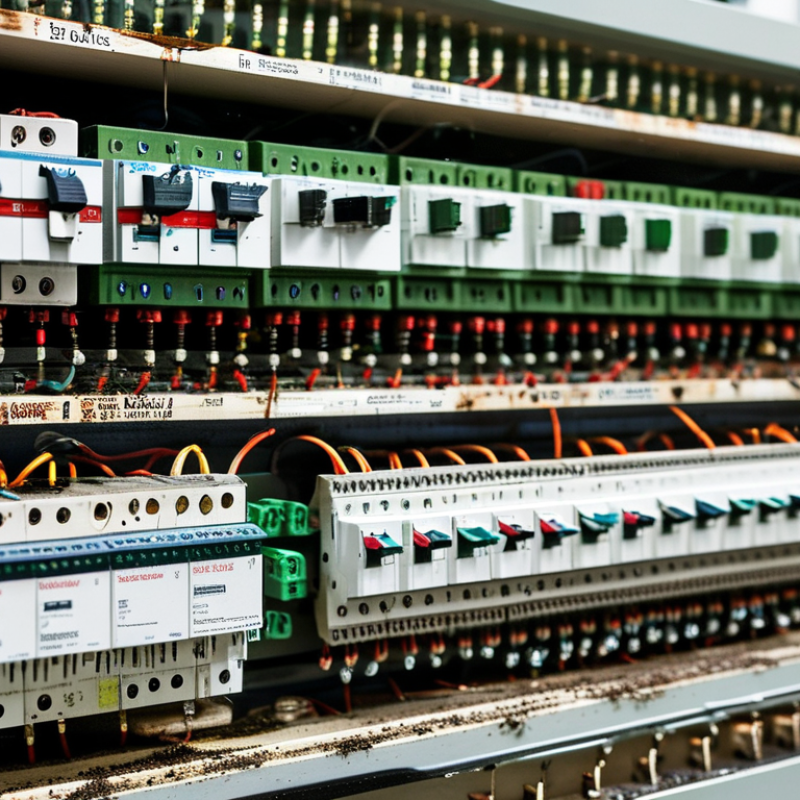
Before comparing prices, define the contactor’s electrical requirements in measurable terms. Record the system voltage, full-load current, frequency, and load type. Motors, heaters, compressors, and capacitor banks create different switching stresses. A motor may draw five to seven times its running current during startup. That surge can damage an undersized contactor.
Specify the number of poles and the required coil voltage, such as 24 V DC or 230 V AC. Confirm the control circuit’s available voltage, tolerance, and frequency. Check the contactor’s utilization category, short-circuit protection, and rated operating current. Do not rely only on horsepower or kilowatt figures. Those values can hide important differences between resistive and inductive loads.
The intended application also determines mechanical and environmental requirements. A conveyor may switch repeatedly, while a pump could operate only a few times daily. Estimate switching cycles, duty time, ambient temperature, humidity, dust, and installation altitude. For an outdoor panel, enclosure protection and terminal spacing deserve careful review. In practical purchasing work, the first specification is often incomplete. I have seen buyers confirm voltage but overlook coil power or startup current. That small gap can cause nuisance trips, welded contacts, or premature wear. Ask for tested ratings, dimensional drawings, wiring data, and applicable conformity documentation before approving the order. Mistakes remain expensive.
| No. | Electrical or Application Dimension | What to Define Before Buying | Practical Reference Data | Buyer Verification Point |
|---|---|---|---|---|
| 1 | Load Type | Identify whether the contactor will switch a resistive load, motor, capacitor bank, transformer, heater, compressor, or other inductive equipment. | Motor loads have higher starting current than resistive loads. Capacitor and transformer applications can create short-duration inrush currents. | Match the contactor utilization category and ratings to the actual load, not only to the load's continuous current. |
| 2 | System Voltage and Frequency | Specify the nominal voltage, operating voltage range, AC or DC system type, and supply frequency where applicable. | Common low-voltage AC systems include 120 V, 230 V, 400 V, and 480 V. Common frequencies are 50 Hz and 60 Hz. | Confirm that the contactor's utilization voltage and insulation voltage are suitable for the installation. |
| 3 | Rated Operational Current | Calculate the normal full-load current and allow for the selected utilization category, ambient temperature, and duty cycle. | For a three-phase motor, approximate current can be estimated from power, voltage, efficiency, and power factor; the motor nameplate remains the primary reference. | Do not select solely by horsepower or kilowatts. Compare the manufacturer's current rating at the actual voltage and duty. |
| 4 | Utilization Category | Choose the applicable switching category according to how frequently the contactor makes, breaks, and controls the load. | IEC utilization categories include AC-1 for mainly resistive loads, AC-3 for squirrel-cage motor starting and running, and AC-4 for inching or plugging. | Request test ratings for the exact category instead of comparing only the general thermal current rating. |
| 5 | Control Coil Voltage | Define the coil supply type and voltage, including whether the control circuit is AC or DC. | Common coil options include 24 V AC, 24 V DC, 110–120 V AC, and 220–240 V AC. The permitted voltage tolerance varies by design. | Check the coil marking, pickup voltage, dropout voltage, and compatibility with the PLC, relay, or control transformer. |
| 6 | Number of Poles and Contacts | Determine the number of main poles and whether auxiliary normally open or normally closed contacts are required. | Three-pole contactors are commonly used for three-phase motor switching. Auxiliary contacts support interlocking, signaling, and control logic. | Verify contact arrangement, terminal identification, auxiliary contact rating, and whether additional blocks are permitted. |
| 7 | Short-Circuit Coordination | Define the available fault current and the required coordination with fuses, circuit breakers, overload relays, or motor protection devices. | Coordination may be classified as Type 1 or Type 2 under applicable IEC motor-starter requirements. The required short-circuit rating depends on the installation. | Request coordination tables or tested combinations for the selected protective device and prospective fault level. |
| 8 | Operating Frequency and Duty Cycle | Estimate switching operations per hour or day, starting frequency, on-time, off-time, and expected service life. | High-frequency starting, jogging, and inching produce more mechanical and electrical wear than occasional switching. | Compare the specified mechanical and electrical endurance with the planned operating cycle. |
| 9 | Environmental Conditions | Define ambient temperature, altitude, humidity, dust, vibration, corrosive atmosphere, enclosure type, and installation orientation. | Air density decreases with altitude, which can affect cooling and dielectric performance. High humidity and dust may accelerate insulation and contact wear. | Check derating information, storage and operating limits, terminal protection, and the required enclosure rating. |
| 10 | Compliance and Installation Compatibility | Define the required technical standards, certification documents, wiring method, mounting dimensions, terminal size, and maintenance access. | IEC 60947-4-1 covers low-voltage contactors and motor-starters. UL and other national requirements may apply depending on the destination market. | Obtain datasheets, declarations, test reports, dimensional drawings, wiring diagrams, and installation instructions before final approval. |
Note: Final selection should be based on the equipment nameplate, applicable electrical codes, installation conditions, and the contactor manufacturer's tested ratings.