+86 13868429846


Modern appliances depend on stable electrical power, yet household voltage can fluctuate without obvious warning. A brief spike may damage sensitive control boards, while low voltage can make motors run hot and inefficiently. A refrigerator may hum unevenly. A washing machine may stop mid-cycle. These small signs deserve attention.
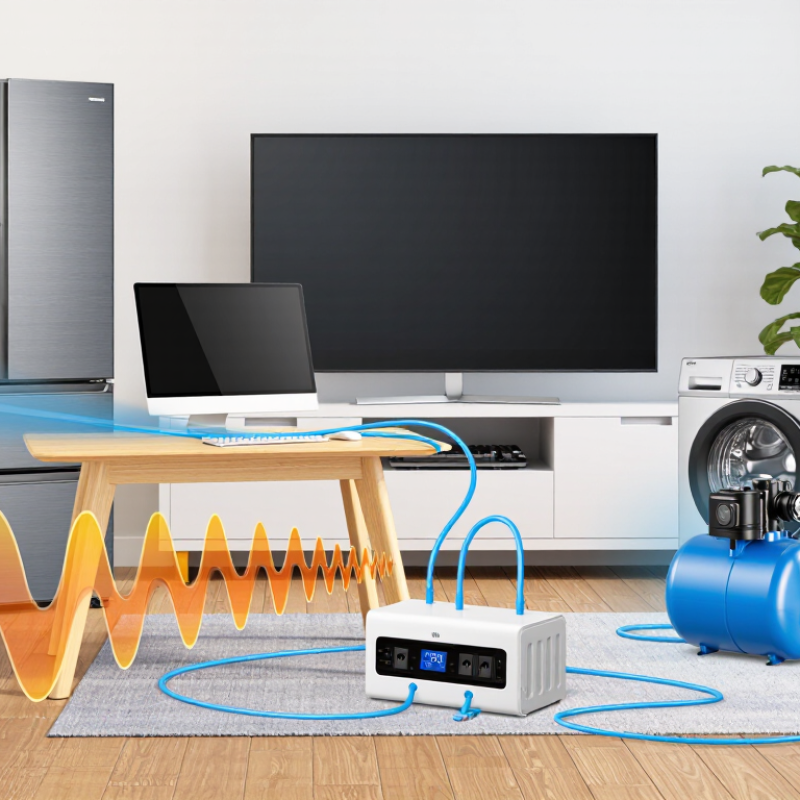
An Appliance Voltage Protector monitors incoming voltage and disconnects equipment when conditions become unsafe. It reconnects power after voltage returns to an acceptable range, depending on its design and settings. This added layer of protection can support refrigerators, televisions, computers, pumps, and other valuable appliances. It is especially useful where power quality is inconsistent or electrical equipment is frequently used.
Protection is never absolute. It is not a substitute for proper grounding, circuit maintenance, or professional electrical inspection. Some models protect against overvoltage and undervoltage, but not every product handles surges, lightning, or wiring faults. That distinction matters. Choosing a device only because it is inexpensive may create false confidence.
A reliable decision begins with practical details: appliance wattage, starting current, plug type, response time, reset behavior, and manufacturer instructions. Look for documented testing and clear technical specifications. An electrician can also confirm whether the protector matches the circuit and appliance load. In my experience, careful installation matters as much as the device itself. The right choice protects more than equipment; it protects continuity, reduces avoidable repair costs, and encourages safer household power habits. Still, every home has different risks. A thoughtful assessment remains necessary.
Why Choose an Appliance Voltage Protector?
What an Appliance Voltage Protector Is and How It Works
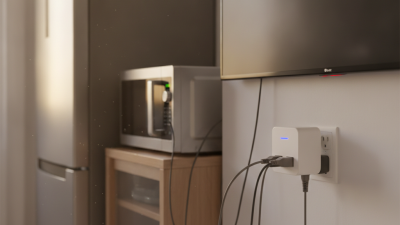
An appliance voltage protector is a compact device placed between a wall socket and an appliance. It monitors the incoming electrical voltage continuously. When voltage rises above or falls below a safe range, the protector disconnects power through an internal relay. This simple action can prevent overheating, circuit damage, and sudden motor failure.
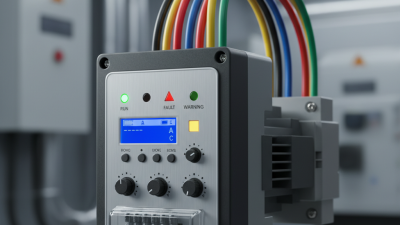
Many models also include a short reconnection delay. After power returns, the device waits before restoring electricity. This matters for refrigerators, air conditioners, pumps, and other compressor-based equipment. Their motors need time to release built-up pressure. A small display may show voltage, while indicator lights reveal protection status. These details help users notice unstable power instead of guessing.
A voltage protector is not magic. It cannot repair faulty wiring or replace proper grounding. It may also offer limited defense against lightning-level surges, depending on its design and testing standards. During routine equipment checks, I look for heat marks, loose plugs, and repeated cutoffs. Frequent disconnections can indicate a serious supply problem. I once underestimated that warning, and the appliance still operated poorly afterward. The protector reduced risk, but it did not solve the underlying electrical fault. Always check the device’s rated voltage, current, and appliance compatibility before use.
Why Choose an Appliance Voltage Protector?
Household appliances need protection because utility voltage is rarely perfectly stable. Storms, overloaded lines, loose connections, and nearby heavy equipment can create surges or voltage drops. A refrigerator compressor may struggle to restart. A television may reboot repeatedly. Small electronics can suffer silently, even when no damage appears.
The U.S. Department of Energy identifies voltage disturbances as a power-quality concern that can affect motors and electronic controls. EPRI’s widely cited 2001 assessment estimated that U.S. businesses lost between 119 and 188 billion dollars annually from power-quality problems. That figure is old, but it shows the scale of the risk. IEC 60364-4-44 also addresses protection against voltage disturbances in low-voltage installations. A voltage protector can disconnect an appliance during abnormal conditions, then reconnect it after voltage becomes stable. It is useful, but not magic. It cannot repair faulty household wiring or replace proper grounding.
Tips: Check the protector’s voltage range and response time. Match its rated load with the appliance. Avoid placing one high-power appliance on a low-capacity device. Inspect plugs for heat marks, buzzing, or looseness. A protector may reduce risk, but it should not hide an electrical fault. I would not treat every brief flicker as an emergency, yet repeated flickering deserves inspection by a qualified electrician. The right choice depends on local voltage conditions, appliance sensitivity, and installation quality.
Household appliances can be affected by voltage fluctuations. This chart shows the nominal voltage and a reference ±10% voltage band commonly used for low-voltage supply planning.
Reference values: 120 V systems typically range from 108 to 132 V, while 230 V systems typically range from 207 to 253 V under a ±10% reference band. Actual utility limits may vary by location.
Voltage changes can happen during storms, grid switching, or heavy neighborhood demand. A voltage protector monitors incoming electricity and disconnects power when levels become unsafe. It reconnects after the supply stabilizes, helping reduce stress on compressors, circuit boards, and motors.
This protection is especially useful for refrigerators, washing machines, televisions, and other sensitive appliances. A practical benefit is prevention rather than repair. Replacing a damaged control board can cost far more than installing a suitable protector. Many units also include delay functions, which help prevent rapid restarts after an outage. That detail matters for refrigerators and air conditioners. However, a protector is not a magic shield. It cannot correct poor wiring, unlimited surges, or an appliance with existing damage. That limitation deserves attention.
Choosing a voltage protector starts with the appliance, not the socket. Refrigerators and freezers need a time delay, often three minutes, before compressor restart. Televisions and computers need fast disconnection and reliable surge control. Washing machines may require higher current capacity because their motors draw extra power during startup. Check the appliance nameplate for voltage, wattage, and frequency before buying.
IEEE Std 1159-2019 classifies a voltage sag as a drop to 10–90% of nominal voltage. It may last from half a cycle to one minute. These brief events can reset electronics or overheat motors. Lawrence Berkeley National Laboratory estimates that U.S. power interruptions cost between 28 and 169 billion dollars annually. That figure covers wider grid failures, but it shows why local protection deserves attention. A protector cannot repair bad wiring. That part is easy to forget.
Tips: Match the protector’s rated current with the appliance’s maximum load. Add a compressor delay for cooling equipment. Choose adjustable high- and low-voltage limits only when the appliance manual permits them. Confirm grounding and installation requirements. A surge-only device may not correct sustained low voltage. Test the protector with a certified meter, not just its indicator light. In practice, one setting rarely suits every appliance. Even careful choices need review after seasonal voltage changes.
Why Choose an Appliance Voltage Protector?
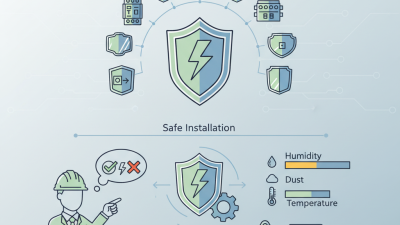
Safe installation begins with matching the protector to the appliance, circuit voltage, and expected load. Check the product rating, grounding method, and maximum current before connecting anything. A protector should never replace a circuit breaker, fuse, or proper earthing system. It is a supporting device.
NFPA reported that electrical distribution and lighting equipment caused about 32,620 home structure fires annually from 2015 to 2019. These fires caused approximately 470 deaths and 1,100 injuries. The figures show why careful installation matters. Keep the protector dry and ventilated. Do not place it beneath leaking pipes or behind tightly packed furniture. A qualified electrician should inspect fixed installations, especially in older buildings. Small details matter.
During everyday use, watch for heat, buzzing, discoloration, or repeated shutdowns. Unplug the appliance and arrange inspection if any sign appears. IEEE Standard 1159 identifies sags, swells, interruptions, and transients as common power-quality events. A voltage protector can reduce certain risks, but it cannot repair faulty wiring or guarantee uninterrupted power. That limitation is easy to forget. Test the device only as its instructions allow, and replace it after serious electrical damage. I would also review the setup after renovations, because a safe connection can become unsuitable when loads change.
| Data Dimension | Typical Information | Safety or Usage Value | Recommended Practice |
|---|---|---|---|
| Primary Purpose | Monitors the incoming electrical voltage and disconnects the appliance when voltage moves outside a preset safe range. | Helps reduce the risk of damage caused by prolonged overvoltage, undervoltage, or unstable power. | Use a protector that is specifically suitable for the appliance type, voltage system, and electrical load. |
| Commonly Protected Appliances | Refrigerators, freezers, washing machines, air conditioners, televisions, computers, and other sensitive electronic equipment. | Motor-driven and electronic appliances can be affected by abnormal voltage and repeated power interruptions. | Check the appliance manual before selecting a protector, especially for appliances with compressors, heating elements, or variable-speed motors. |
| Nominal Supply Voltage | Common household systems include approximately 120 V or 230 V, depending on the country and local electrical standard. | A protector must match the nominal voltage of the circuit to operate correctly. | Confirm the voltage printed on the appliance rating label and the local supply specification before installation. |
| Operating Voltage Range | Typical products use a manufacturer-defined normal operating window around the nominal voltage. The exact limits vary by model. | The operating window determines when the protector allows power to pass or disconnects the appliance. | Do not assume that all protectors use the same upper and lower voltage thresholds; verify the product specifications. |
| Undervoltage Protection | Disconnects the load when supply voltage remains below the configured lower threshold. | Helps protect motors from inefficient operation, overheating, or difficulty starting under low-voltage conditions. | Allow the appliance to reconnect only after the supply has returned to a stable level. |
| Overvoltage Protection | Disconnects the load when supply voltage exceeds the configured upper threshold. | Helps limit stress on power supplies, control boards, lamps, and other electrical components. | Investigate repeated overvoltage events rather than repeatedly resetting the protector. |
| Time Delay Function | Many appliance protectors include a restart delay, often ranging from a few seconds to several minutes depending on the design. | Reduces rapid restarting after a power interruption, which is particularly useful for compressor-based appliances. | Choose a delay appropriate for the appliance and never bypass the delay unless the appliance manufacturer permits it. |
| Load Capacity | Specified by rated voltage, current, power, or a combination of these values. The rating differs between products. | Correct sizing helps prevent overheating, nuisance tripping, and premature failure. | Compare the protector rating with the appliance's rated current and starting current. Do not exceed the lowest applicable rating. |
| Starting Current | Motors and compressors may briefly draw more current during startup than during normal operation. | A protector with insufficient capacity may disconnect unnecessarily or overheat. | For refrigerators, pumps, air conditioners, and other motor loads, confirm that the protector supports the appliance's starting demand. |
| Installation Location | Usually installed between the wall outlet and the appliance, or fitted in the electrical circuit by a qualified electrician. | Correct placement allows the device to monitor the actual supply reaching the appliance. | Keep the protector accessible, dry, ventilated, and away from heat, water, and mechanical damage. |
| Grounding Requirement | Grounding requirements depend on the appliance, protector design, and local electrical code. | Proper grounding supports electrical safety and may be necessary for protective functions to work as intended. | Use a properly grounded outlet and never remove or defeat the grounding connection. |
| Plug and Outlet Compatibility | The plug type, socket configuration, voltage, and frequency must be compatible with the local electrical system. | Compatibility reduces the risk of loose connections, overheating, arcing, and incorrect operation. | Do not force a plug into an incompatible outlet or use unsafe adapters and extension arrangements. |
| Extension Cord Use | Extension cords can add connection points and may have a lower current rating than the appliance circuit. | Improper extension use can cause voltage drop, heating, and accidental disconnection. | Connect directly to a suitable wall outlet whenever possible. If an extension cord is unavoidable, use one with an adequate rating and condition. |
| Surge Protection | Voltage protection and surge protection are related but different functions. Not every voltage protector is designed to absorb transient surges. | Understanding the difference helps avoid relying on a device for protection it does not provide. | Check whether the product specifically includes transient surge protection and review its technical specifications. |
| Power Restoration | After an outage, the supply may fluctuate briefly before becoming stable. | A delay before reconnection can reduce repeated on-off cycling and protect sensitive equipment. | Keep the appliance connected only if the protector is designed for automatic reconnection and the delay setting is appropriate. |
| Indicator Lights or Display | Many devices show input status, protected status, delay mode, or fault conditions with indicators or a digital display. | Status information makes it easier to identify abnormal voltage or a temporary delay. | Learn the meaning of each indicator from the product instructions before relying on it during a fault. |
| Routine Inspection | Inspect the plug, socket, cable, enclosure, and indicator operation periodically. | Early detection can identify heat damage, loose connections, cracked insulation, or abnormal behavior. | Disconnect the device and stop using it if there is burning odor, discoloration, buzzing, melting, smoke, or visible damage. |
| Moisture and Environment | Most indoor protectors are intended for clean, dry locations and are not automatically suitable for outdoor or damp areas. | Moisture, dust, and condensation can increase the risk of shock, corrosion, and short circuits. | Use only in the environmental conditions specified by the manufacturer and keep ventilation openings clear. |
| Multiple Appliances | A single protector should generally be used only within its rated load and connection design. | Overloading or daisy-chaining devices can increase heat and reduce protection reliability. | Do not connect multiple high-power appliances through one protector unless the total load and installation method are explicitly approved. |
| Electrical Code Compliance | Installation requirements vary by country, building type, circuit design, and appliance power. | Compliance supports safe operation and may be required for fixed or high-power installations. | Have a qualified electrician install hard-wired protectors or devices used with high-current appliances. |
| When to Replace | Replacement may be necessary after severe electrical events, visible damage, repeated faults, or failure of the status indicators. | Internal protective components can degrade even when external damage is not obvious. | Follow the manufacturer's service guidance and replace any protector that no longer operates normally. |
| Important Limitation | A voltage protector cannot correct a defective utility supply, damaged wiring, poor grounding, or an appliance with an internal fault. | It is one layer of protection, not a substitute for proper electrical maintenance. | Contact a qualified electrician or utility provider when voltage problems are frequent, severe, or present across multiple circuits. |