Leave Your Message

10 Best MCB Circuit Breakers for Global Buyers in 2026

Choosing an MCB Circuit Breaker is a small decision with serious consequences. The right device helps protect wiring from overloads and short circuits. The wrong choice can leave a panel poorly matched to its load, installation, or environment. A compact breaker may sit unnoticed for years. Its ratings still matter every day.

The International Energy Agency’s Electricity 2024 report projected global electricity demand growth averaging 3.4% annually from 2024 through 2026. That trend makes dependable low-voltage distribution increasingly important, though it does not prove demand for any specific breaker model. IEC 60898-1 provides a key reference for household and similar-use circuit breakers. Buyers should compare rated current, breaking capacity, trip characteristics, pole configuration, compatibility, and documented test results—not just price or appearance. A label alone is not proof.

This guide examines ten options for global buyers in 2026, with attention to practical specifications, manufacturer documentation, and application fit. Small device. Major responsibility. The source material supplied for this introduction contains no verifiable quotation from a named MCB specialist. Rather than invent one, this guide relies on published technical references; any expert quotation should be checked against its original source before publication. That restraint is deliberate. Product availability and local installation requirements vary, so confirm suitability with qualified professionals and current documentation.

10 Best MCB Circuit Breakers for Global Buyers in 2026

What Miniature Circuit Breakers Do and Where They Are Used

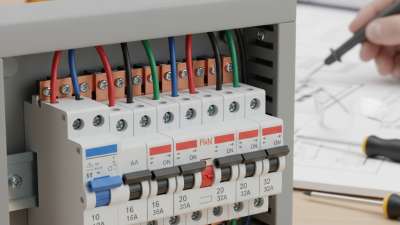
A miniature circuit breaker (MCB) protects an electrical circuit from excessive current. When an overload persists or a short circuit occurs, its internal mechanism trips and opens the circuit. Many MCBs use thermal and magnetic release mechanisms. Once the fault has been identified and corrected, the breaker can usually be reset. It is not designed to detect every electrical hazard, such as current leaking to earth. That distinction matters.

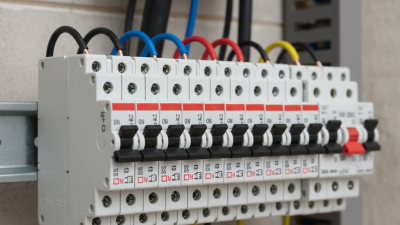
MCBs are commonly installed in distribution boards serving homes, offices, shops, and some light industrial spaces. One breaker might protect a lighting circuit, while another serves wall outlets or a small fixed appliance. If a fault occurs, the affected circuit can be isolated without necessarily switching off the entire building. A tripped handle is a useful clue, but it does not explain the cause. Repeatedly resetting it is not a safe diagnosis.

Choosing an MCB involves more than matching its current rating to a familiar appliance. Voltage, pole count, trip characteristics, conductor size, and prospective fault current all matter. The breaker’s interrupting capacity must suit the installation, and the circuit design should be checked by a qualified professional. Panel labels can be outdated, too. Verify the wiring rather than trusting the handwriting. A correctly selected MCB helps limit damage, but it cannot compensate for poor connections or unsuitable wiring.


How to Compare MCB Ratings, Poles, and Tripping Curves

When comparing MCBs, match the rated current to the circuit’s expected load and cable capacity. A 16 A rating does not mean every 16 A circuit is suitable; installation conditions matter. Check the breaking capacity against the prospective fault current at the installation point. Details matter. A rating that looks right may still be inadequate if the available fault current is higher.

Pole selection depends on the supply and what must be isolated. Single-pole devices commonly protect a live conductor, while two-, three-, or four-pole options can suit other system arrangements. Confirm the neutral-switching requirements for the specific installation. Check the label. Pole count alone does not confirm that a device fits the circuit or enclosure.

The tripping curve describes how quickly the MCB responds to different levels of overcurrent. Type B generally trips magnetically at lower multiples of rated current, while Type C tolerates higher brief inrush currents. Type D is intended for circuits with still higher starting surges, but it is not a universal upgrade. Compare the device curve with equipment startup behavior and the circuit’s fault conditions. In practice, guessing from the appliance nameplate can be misleading. Verify coordination and disconnection requirements against current technical documentation, and have a qualified electrical professional confirm the selection.

How to read this chart: The bars show typical instantaneous magnetic trip thresholds as multiples of an MCB’s rated current (In), based on IEC 60898-1 curve definitions: B = 3–5 × In, C = 5–10 × In, and D = 10–20 × In. For example, a 10 A Type C MCB has a typical instantaneous threshold of 50–100 A. Compare rated current with the circuit requirements, and choose pole configuration to suit the supply and isolation needs. Always check the applicable standard and manufacturer’s product data.

Ten MCB Circuit Breakers to Consider for Global Buyers in 2026

Global buyers can compare ten MCB profiles by application, rather than price alone. A single-pole, B-curve breaker may suit some light residential circuits. A single-pole, C-curve model can be considered where equipment has higher startup current. Two-pole units can disconnect both conductors in suitable systems. Three-pole and four-pole versions serve different three-phase arrangements. Confirm the circuit design before choosing either.

Other options include a higher-breaking-capacity MCB for installations with greater prospective fault current, and a DC-rated model for compatible direct-current circuits. Narrow modular units can help in crowded distribution boards. Models specified for higher ambient temperatures may matter in warm enclosures. Auxiliary-contact-compatible breakers can support remote status monitoring. Details matter. Ratings and accessories vary by design.

Compare rated current, voltage, pole count, trip curve, and breaking capacity against the installation’s requirements. Check the product marking and technical documentation, not just a sales description. Local certification and installation rules differ, so buyers should verify them with a qualified electrical professional. A tidy specification sheet is useful, but it cannot replace an accurate site assessment. I would not choose by a familiar curve letter alone; the load and available fault current can change the right fit.

10 Best MCB Circuit Breakers for Global Buyers in 2026 — Ten MCB Circuit Breakers to Consider for Global Buyers in 2026

No. MCB Configuration Poles Example Rated Current (In) Trip Curve Typical System Voltage Example Breaking Capacity (Icn) Typical Application
1 Single-pole B6 1P 6 A B 230 V AC, typical single-phase supply 6 kA example Low-current lighting circuits, where permitted by local wiring rules
2 Single-pole B16 1P 16 A B 230 V AC, typical single-phase supply 6 kA example General-purpose circuits with relatively low inrush current
3 Single-pole C16 1P 16 A C 230 V AC, typical single-phase supply 6 kA example Circuits with moderate inrush, subject to load and cable design
4 Single-pole C32 1P 32 A C 230 V AC, typical single-phase supply 6 kA example Higher-current single-phase circuits, when conductor capacity allows
5 Two-pole B16 2P 16 A B 230 V AC, typical single-phase supply 6 kA example Single-phase circuits where simultaneous switching of two conductors is required
6 Two-pole C32 2P 32 A C 230 V AC, typical single-phase supply 6 kA example Higher-current single-phase circuits needing two-pole switching
7 Three-pole C16 3P 16 A C 400 V AC, typical three-phase system 6 kA example Three-phase branch circuits with moderate inrush current
8 Three-pole C32 3P 32 A C 400 V AC, typical three-phase system 10 kA example Three-phase feeders or equipment circuits where the calculated fault level requires it
9 Three-pole D16 3P 16 A D 400 V AC, typical three-phase system 10 kA example Loads with high starting current, after checking fault-loop conditions and coordination
10 Four-pole C40 4P 40 A C 400 V AC, typical three-phase system 10 kA example Three-phase circuits requiring switching of three phases and neutral

Selection note: These are example configurations, not recommendations for a specific installation. Confirm the applicable standard, rated voltage, breaking capacity, conductor sizing, prospective short-circuit current, pole arrangement, and local regulations against the exact product documentation. Under IEC 60898-1, B, C, and D instantaneous trip ranges are typically 3–5, 5–10, and 10–20 times rated current, respectively.

How International Standards and Regional Approvals Affect MCB Choice

An MCB that meets IEC 60898-1 may still need local approval before sale or installation. For industrial applications, IEC 60947-2 may be relevant, depending on the device and system. Check the destination market’s accepted standard, certification mark, and required documentation—not just a catalogue statement. Small print matters. Voltage, rated current, pole count, trip curve, and short-circuit breaking capacity must suit the circuit and prospective fault current. A 6 kA rating, for example, is not automatically adequate at every panel. It must match the site conditions and applicable requirements.

Regional differences can affect frequency, supply voltage, enclosure practices, and how products are tested or marked. A breaker selected for one market may not fit another panel’s busbar spacing or terminal arrangement. Look closely at the installation drawings. Ask the supplier for test reports and approval documents that identify the exact model and rating. Then confirm acceptance with the local engineer or inspection authority, since rules and interpretations can change. This step takes time, and paperwork can be confusing. I would not treat a familiar label as proof of suitability; verify the details against the actual circuit and installation.

How to Match an MCB to an Electrical System and Installation Needs

Choosing an MCB starts with the circuit, not the catalogue. Check the system voltage, number of poles, and expected load current. A breaker rated too low may trip during normal operation; one rated too high may not protect the cable adequately. Match its rating to the conductor size and installation conditions, and have a qualified electrician verify the design.

Then consider the load. Lighting circuits, socket outlets, motors, and equipment with high starting currents can behave differently. The trip curve matters: a motor may need more tolerance at startup than a simple lighting circuit. Short-circuit breaking capacity must also meet or exceed the prospective fault current at the installation point. Check the manufacturer’s technical data. Small details count.

Fit and environment deserve attention too. Confirm the distribution board accepts the MCB’s mounting format and terminal arrangement. In a warm, crowded enclosure, heat can affect performance, so the stated rating may need adjustment. It is tempting to select by amperage alone. That shortcut is easy, but not always sound. Record the circuit details, check compatibility, and review the choice against applicable electrical standards before installation.