+86 13868429846


Choosing among China’s top Motor Protection Controller manufacturers calls for more than comparing prices or catalog pages. The right controller must match the motor, load, and operating environment. A pump room with humid air has different demands from a clean assembly line. Small details matter. Buyers should check rated current, protection functions, adjustment ranges, communication options, and installation requirements. They should also ask how each model responds to overload, phase loss, and phase imbalance. James Reason, the safety researcher, wrote, “We cannot change the human condition, but we can change the conditions under which humans work.” His observation is not about controllers specifically, but it offers a useful safety principle: equipment selection should reduce avoidable risk.
This guide compares manufacturers through practical questions, not broad claims. Does the supplier publish clear technical data? Can it explain product testing and quality controls? Are manuals readable, and are replacement parts or technical support accessible? These points can shape commissioning and maintenance long after a purchase order is signed. A controller may look impressive on paper, yet still be a poor fit for a particular motor or panel. That is worth admitting. Specifications alone cannot show how consistently a supplier handles real installation problems. The sections ahead outline what to review when assessing Chinese manufacturers, comparing product capabilities, and checking whether a supplier’s support matches your project. Use the shortlist as a starting point, then verify details directly with each manufacturer.
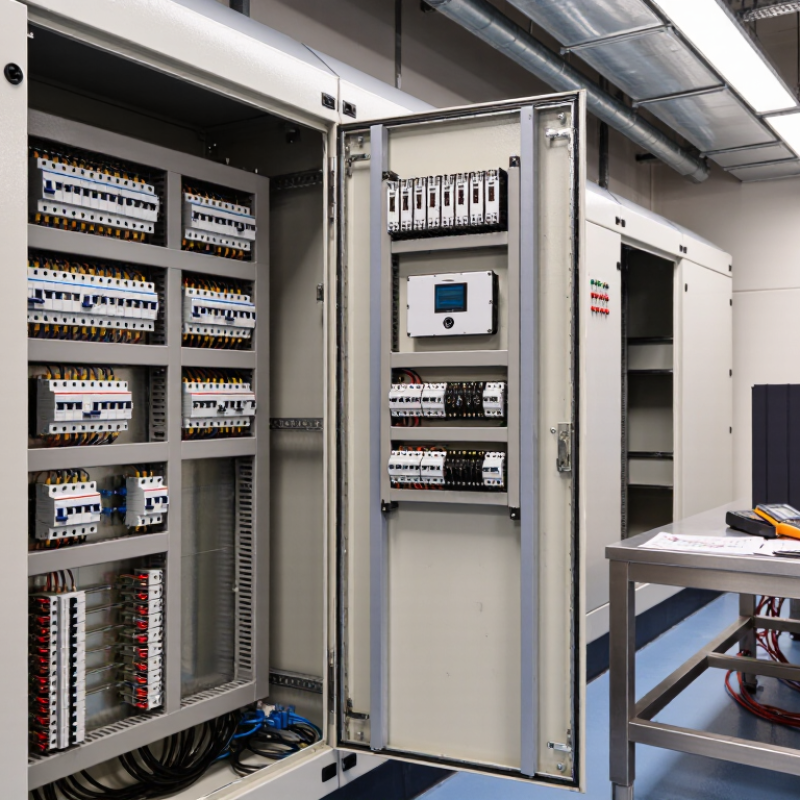
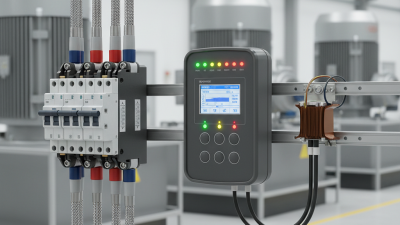
A motor protection controller monitors a motor’s operating conditions and initiates a trip when readings indicate a damaging fault. It commonly checks current and, depending on the design, voltage, phase balance, or temperature. If a pump motor draws excessive current during a jam, the controller can signal a contactor to disconnect power. That matters. The controller is a protective device, not a repair tool; it cannot clear a blocked impeller or correct poor wiring.
The International Energy Agency’s 2011 analysis of electric motor systems estimated that they consume roughly 45% of global electricity. That scale makes dependable protection relevant to both equipment uptime and energy management. In practice, protection settings should match the motor nameplate, load, starting method, and site conditions. A trip set too high may leave a motor exposed; one set too low can cause nuisance shutdowns. IEC 60947-4-1 covers low-voltage contactors and motor-starters, including overload protection provisions. Still, a controller’s functions vary by model, and the label alone does not prove suitability. Check its specifications, sensor arrangement, and coordination with the contactor. A small detail can matter: loose terminals may heat up without an obvious change in the motor’s workload.

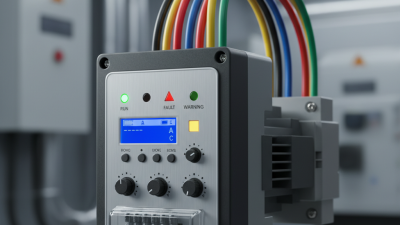
Motor protection controllers do more than stop a motor after an overload. They monitor current, voltage, and operating time, then compare readings with configured limits. Thermal overload protection estimates heat buildup, which matters when a motor starts repeatedly or runs under changing loads. Phase-loss and current-imbalance detection can identify supply problems before winding damage becomes severe. Some controllers also detect locked rotors, ground faults, and under- or overvoltage conditions.
Protection quality depends on correct setup. Match the controller’s current range to the motor nameplate, and check that current transformers are installed in the correct direction. Set trip delays with the motor’s actual starting time in mind; a short delay may cause nuisance trips, while a long one can leave the motor exposed. No setting is perfect on paper. Site conditions, such as a hot enclosure or frequent starts, can change the result. Review trip records after commissioning and adjust only with measured evidence.
Tips: Test each protection function using the manufacturer’s procedure. Record settings, motor current, and trip results. A small log helps reveal patterns that memory misses. Keep communication alarms useful, not overwhelming, and verify that operators know what each fault code means.
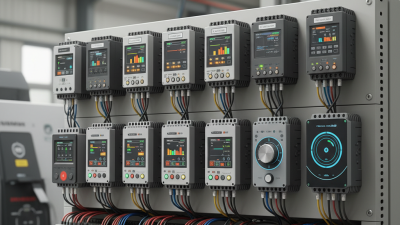
China’s motor protection controller industry is shaped by broad manufacturing capacity and practical demand from pumps, fans, compressors, and production lines. Local suppliers offer devices that monitor current, phase loss, overload, and other operating conditions. Available functions vary by model, so buyers should check technical specifications rather than assume every controller provides the same protection. Some units also support temperature or voltage monitoring.
Product development often balances compact installation, clear fault displays, and compatibility with existing control cabinets. A useful evaluation includes checking rated current, trip settings, wiring diagrams, and test documentation. Ask how calibration is handled and whether technical support can explain fault records. Supplier capabilities differ, and the industry is not perfectly uniform; that variation deserves careful review.
Tips: Match the controller to the motor’s rated current and actual load. Check cabinet space and wiring before ordering. Keep a sample fault log during commissioning. Small details matter. If documentation is vague, request clarification instead of relying on assumptions.
China’s leading motor protection controller manufacturers are increasingly judged by more than price and delivery speed. Buyers need reliable overload, phase-loss, stall, and short-circuit protection matched to real operating conditions. The International Energy Agency’s 2011 report, Energy-Efficiency Policy Opportunities for Electric Motor-Driven Systems, estimated that motor-driven systems use about 46% of global electricity. That figure makes dependable protection a practical efficiency issue, not merely a panel specification.
Strong suppliers provide clear trip curves, adjustable current ranges, and test records that engineers can verify. In a pump cabinet, for example, a controller should respond appropriately to a jammed impeller without nuisance-tripping during normal startup. Ask manufacturers how they validate performance across voltage variation, ambient heat, and repeated starts. Check documentation against relevant IEC requirements, and confirm the device suits the motor’s rated current and duty cycle. A polished datasheet is useful, but it cannot replace a witnessed test. Small details matter.
Export experience and production capacity can help, yet neither proves consistent quality. Request sample inspection results, traceable component records, and after-sales response times. One weakness in many comparisons is that buyers focus on the controller alone; wiring, enclosure temperature, and installation quality also affect protection. I would not treat a low trip-time figure as automatically better. The right setting depends on the motor and load, and that deserves careful review.
| Evaluation Dimension | Typical Controller Capability or Data | What Buyers Should Verify | Relevant Reference |
|---|---|---|---|
| Motor overload protection | Thermal or electronic overload protection using measured motor current; trip behavior depends on the selected setting and controller design. | Adjustable current range, trip class or time-current characteristics, reset mode, and coordination with the motor nameplate data. | IEC 60947-4-1 covers electromechanical contactors and motor starters. |
| Phase loss and phase imbalance | Detection of a missing phase or an uneven three-phase supply, where supported by the model. | Detection method, imbalance threshold, trip delay, and whether the function applies to the intended motor and supply arrangement. | Confirm the protection functions and test conditions in the product documentation. |
| Locked-rotor and stall protection | Current- and time-based protection may be available to identify starting problems or a motor that stops under load. | Starting-time setting, stall threshold, operating mode, and coordination with normal motor starting current. | Settings should be matched to the motor, load, and starting method. |
| Under- and overvoltage protection | Voltage monitoring may be included in controllers designed to measure supply voltage. | Supported voltage system, adjustable thresholds, trip delay, and whether external voltage sensing is required. | Check the controller’s rated supply and measurement specifications. |
| Ground-fault protection | Some models provide residual-current or ground-fault detection; implementation varies by product. | Required sensor or core-balance current transformer, detection range, wiring method, and applicable installation requirements. | Verify the protection method against the site’s electrical protection design. |
| Temperature input | Selected models accept motor temperature sensor inputs, such as PTC thermistors. | Supported sensor type, number of inputs, alarm and trip behavior, and sensor wiring requirements. | Confirm compatibility with the temperature sensor fitted to the motor. |
| Current measurement range | Available ranges depend on the controller model and may use direct current inputs or external current transformers. | Motor full-load current, measurement accuracy, CT ratio and class where applicable, and whether the range covers starting current. | Use the model-specific datasheet and the motor nameplate. |
| Motor starting and control method | Controller configurations may be designed for direct-on-line, reversing, or other starter arrangements; supported schemes vary. | Wiring diagram, contactor arrangement, interlocking requirements, output ratings, and compatibility with the starter circuit. | IEC 60947-4-1 addresses electromechanical motor starters; IEC 60947-4-2 addresses semiconductor motor controllers and starters. |
| Communication and monitoring | Some models provide communication or monitoring interfaces; availability and protocol support are model-dependent. | Protocol, interface type, register map, alarm reporting, isolation, and integration requirements for the control system. | Request the communication manual and verify interoperability before purchase. |
| Standards and documentation | Product documentation should identify ratings, operating conditions, wiring, protection functions, and applicable conformity information. | Exact standard editions, declared ratings, test reports or certificates where required, and installation instructions. | IEC 60204-1 covers electrical equipment of machinery; IEC 60034-1 covers ratings and performance of rotating electrical machines. |
Capabilities and ratings vary by model and configuration. Confirm all specifications, applicable standards, and protection settings against the manufacturer’s current datasheet and the motor nameplate before selection.
When comparing Chinese motor protection controller manufacturers, look beyond catalog claims and headline prices. Ask for the controller’s rated current range, supported supply voltage, trip class, and response to phase loss, overload, and stalled motors. The details matter. A unit tested only at one current setting may behave differently across your actual motor range.
Request sample test records and check how each manufacturer controls calibration, component changes, and final inspection. Test a sample with a known load, then compare its trip response with the published curve. Ask whether settings can be locked and whether fault history is readable after a power interruption. For networked equipment, confirm the communication protocol and test it with your control system before ordering. A polished brochure is not proof.
Evaluate the supplier’s production process as well as the device. Ask how serial numbers link to inspection records, what happens when a batch fails, and how replacement units are handled. Review drawings, wiring diagrams, installation instructions, and clearly stated operating limits. If possible, inspect a production line or arrange an independent factory audit. This takes time. I would not treat one successful sample as proof of consistent output; repeated checks are more convincing, though they add cost. Match every test to the motor, cabinet, and operating conditions where the controller will be installed.